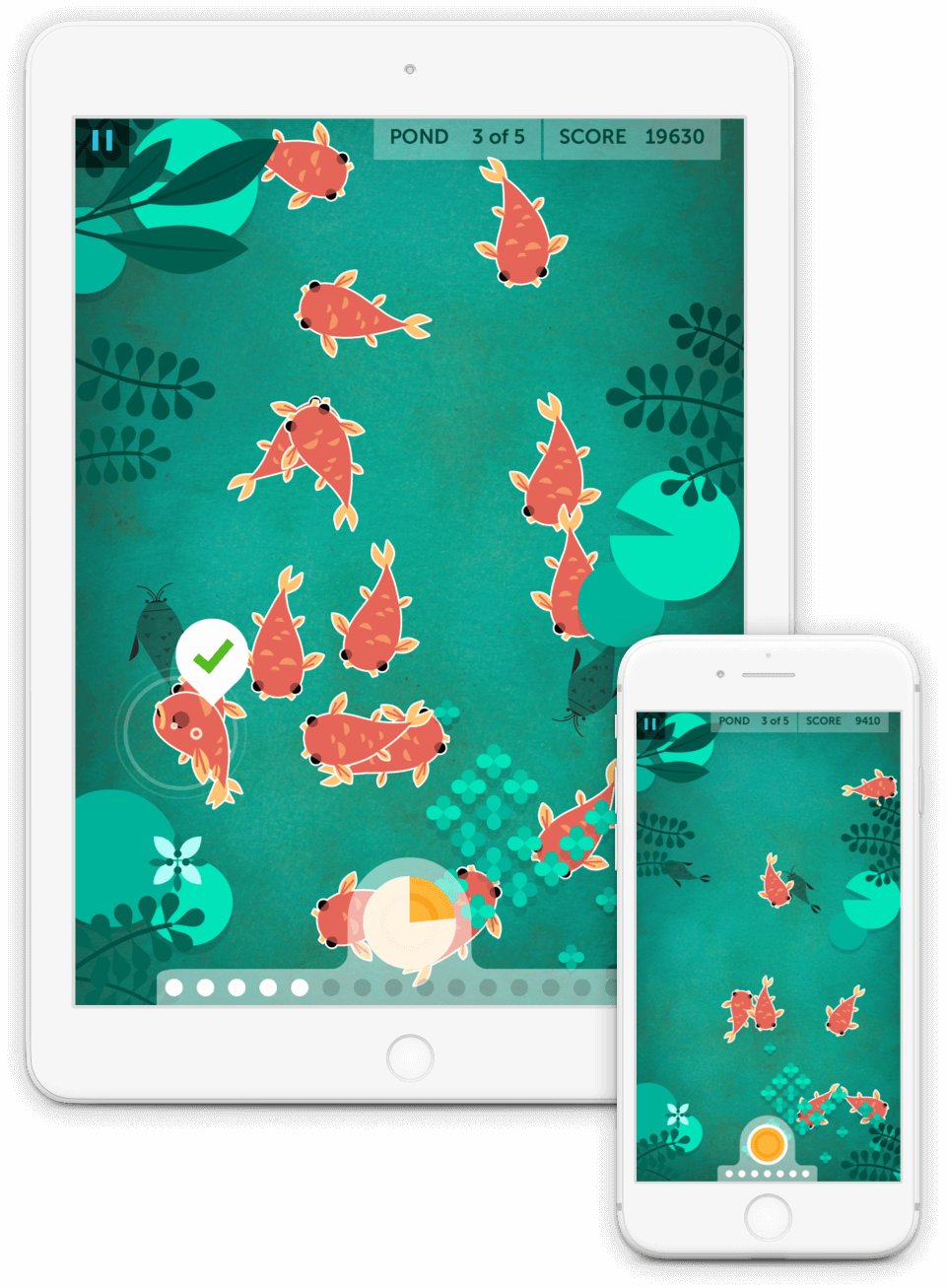
Why Play Playing Koi?
Playing Koi challenges your Divided Attention by requiring you to track and feed multiple moving targets—without repeating any. You’ll need to remember which fish you've already fed, anticipate their movement, and make quick choices as the pace increases.

Divided Attention
Track multiple moving fish and remember which ones you’ve already interacted with.
Visual Tracking
Follow several dynamic targets at once without losing focus.
Working Memory
Hold short-term information about which fish have been fed while making ongoing decisions.
Playing Koi vs Other Attention Games
Many Attention games ask you to filter distractions or manage static tasks. Playing Koi adds movement and memory into the mix. You’re tracking, remembering, and reacting in real time, making it a spatially engaging attention challenge.
Explore Other Attention Games
Discover more Lumosity games that challenge your attention.


Frequently Asked Questions
What cognitive skill does Playing Koi train?
Playing Koi targets Divided Attention by asking you to manage multiple moving elements at once. It also engages Working Memory and Visual Tracking as you remember which fish have already been fed.
What are some tips for playing Playing Koi?
Start by feeding fish near the center or those that cross your path often. Creating a mental pattern or sequence can help avoid repeats. Stay calm—speed improves with practice.
What is Divided Attention?
Divided Attention is the ability to manage multiple inputs or tasks at the same time. It’s especially important in dynamic environments where several things demand your attention at once.
Train more skills on Lumosity
Complete your training by playing games from other cognitive areas.


